Fleas
Fleas are small, dark brown insects that bite dogs to feed on blood. Dogs typically scratch and chew at their skin, which can cause sores and secondary infections. Flea bites appear as small red spots, often accompanied by flea dirt (black specks of dried blood and feces).
Prevention and Care:
- Year-round flea prevention (topicals, collars, oral medications)
- Regular checks for fleas and flea dirt
- Veterinary care for flea allergies or dermatitis
Ticks
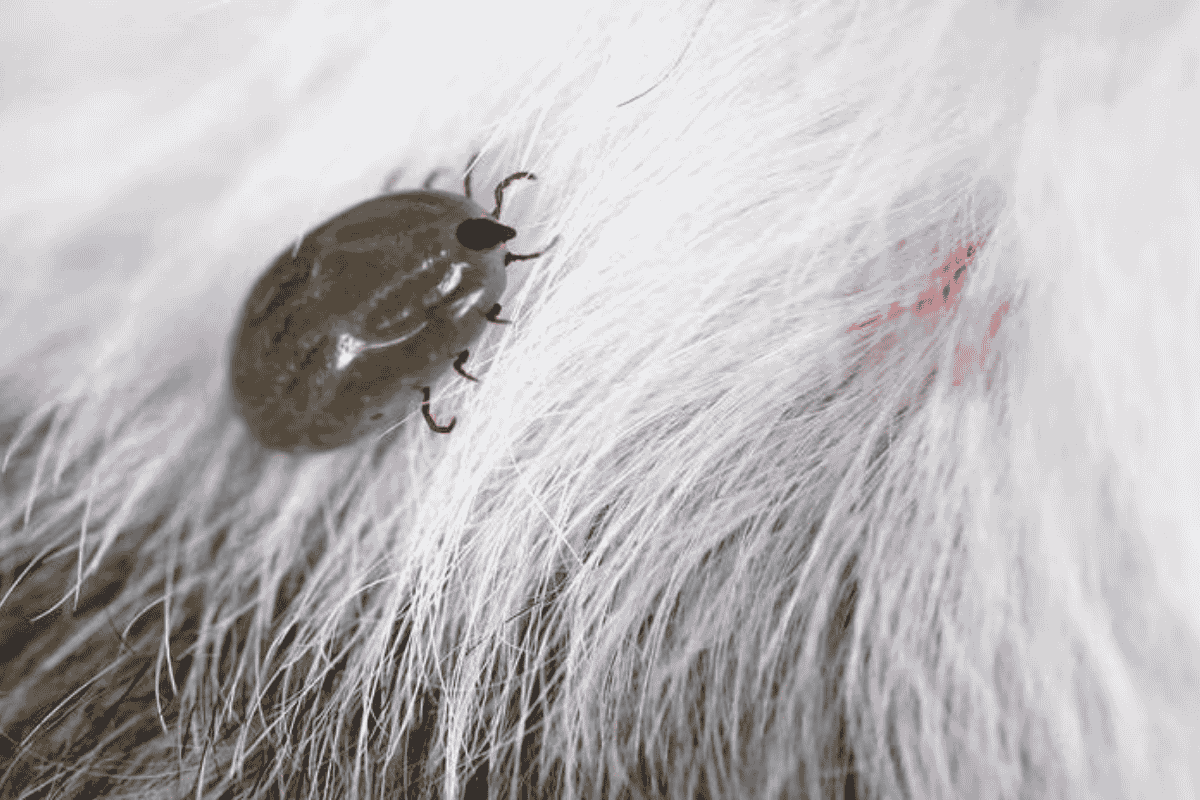
Ticks are eight-legged parasites that attach to a dog’s skin to feed on blood. Tick bites usually appear as red, inflamed, circular areas that may scab. In some cases, Lyme disease can cause a “bullseye” lesion.
Prevention and Care:
- Daily checks after outdoor activities
- Year-round flea/tick prevention
- Veterinary screening for tick-borne illnesses 2–3 months after a bite
Mites
Mites are microscopic parasites that can cause skin conditions like mange. Sarcoptic mange leads to intense itching and hair loss, while demodex mites cause patchy baldness and secondary infections. Ear mites live inside ear canals and cause irritation but aren’t visible externally.
Prevention and Care:
- Veterinary evaluation if mange symptoms appear
- Year-round preventatives such as NexGard, Simparica, or Bravecto
- Avoid contact with infected animals
Mosquitoes
Mosquito bites appear as red, raised lesions, particularly on less hairy areas like ears, belly, and groin. The greatest risk is transmission of heartworm disease.
Prevention and Care:
- Year-round heartworm prevention
- Use pet-safe mosquito repellents
- Yard treatments and topical products (Advantix II, Vectra 3D)
Bees, Hornets, and Wasps
Stings cause sudden pain, swelling, and redness. Dogs may limp or lick the area. Severe allergic reactions can be life-threatening, with symptoms such as facial swelling, hives, difficulty breathing, or vomiting.
Prevention and Care:
- Apply an ice pack for mild stings
- Veterinary consultation for Benadryl dosage
- Emergency care if allergic reactions occur
- Keep dogs away from known nests
Ants
Ant bites, especially from fire ants, cause red, raised lesions, sometimes with pus. Multiple bites may trigger allergic reactions similar to bee stings.
Prevention and Care:
- Ice packs for localized swelling
- Veterinary guidance for antihistamines
- Avoidance of ant hills during walks
- Brush or rinse ants off quickly if found on the dog
Biting Flies
Horse flies, deer flies, black flies, and sand flies cause painful, red, raised skin lesions. Allergic reactions are possible and can be severe.
Prevention and Care:
- Ice packs for mild bites
- Immediate veterinary care for allergic reactions
- Consider repellents if flies are common in your area
Keeping Dogs Safe Outdoors
- Year-round preventatives against fleas, ticks, mosquitoes, and mites
- Heartworm prevention to protect from mosquito-transmitted disease
- Daily skin checks for bites and parasites
- Immediate vet care if allergic reactions or severe symptoms appear