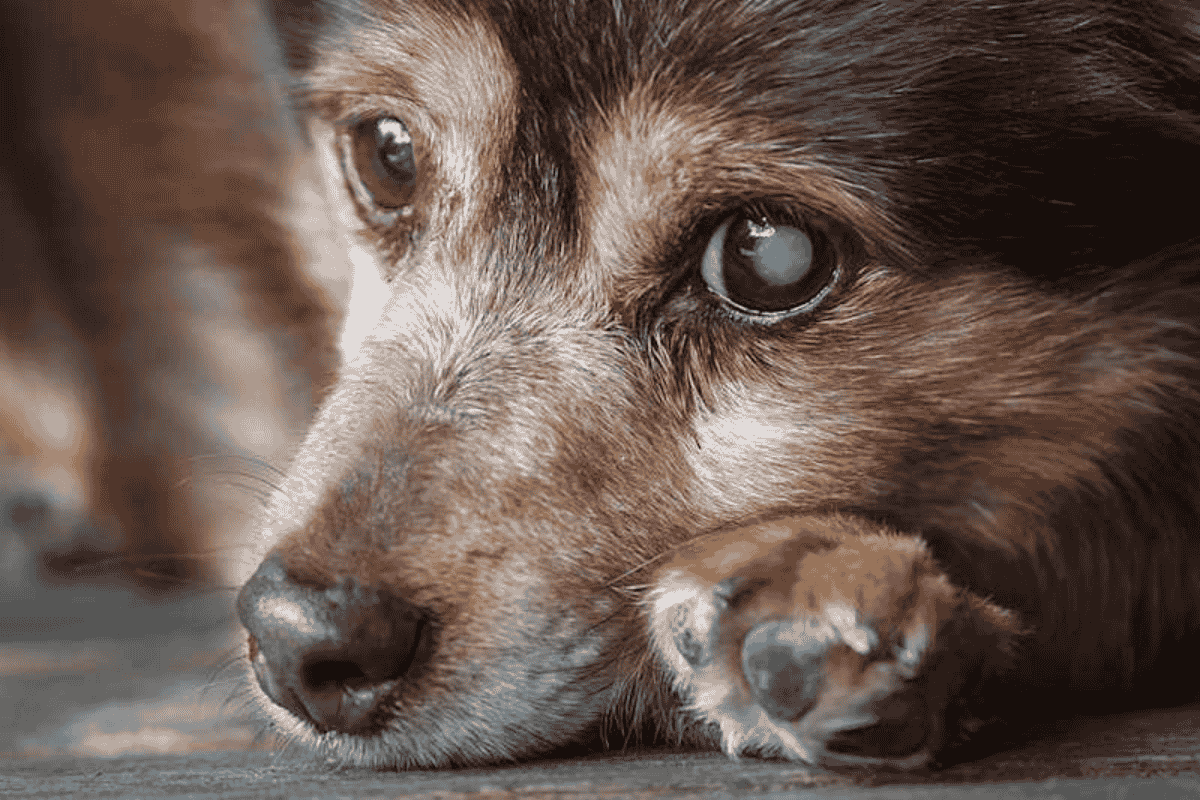
Cataracts in dogs occur when the lens of the eye becomes cloudy due to changes in water balance or protein structure within the lens.
This prevents light from reaching the retina, resulting in vision loss or blindness. A mature cataract appears as a white disk behind the iris, replacing the normal dark appearance of the pupil.
Cataracts vs. Nuclear Sclerosis
Pet parents often confuse cataracts with nuclear sclerosis, a normal age-related hardening of the lens that causes haziness.
- Nuclear sclerosis: Light can still pass through, so vision is only mildly affected.
- Cataracts: Block light transmission, leading to partial or complete blindness.
Diagnosing Canine Cataracts
If you suspect cataracts, schedule a veterinary exam. Using a bright light and magnification, a veterinarian can detect immature cataracts before they affect vision.
The diagnostic process may include:
- Eye exams for cataracts, inflammation (anterior uveitis), and glaucoma.
- Blood work and blood pressure checks to screen for systemic diseases like diabetes and hypertension.
Progression:
- Early stages may be unnoticed.
- Mature cataracts block vision entirely, causing blindness.
- Signs include bumping into objects, hesitancy with stairs, or difficulty locating bowls.
Dogs often adapt remarkably well, especially if vision loss is gradual.
Causes of Cataracts in Dogs
Hereditary Factors
- Over 100 dog breeds are prone to hereditary cataracts.
- Genetic testing is available, though not all carriers develop the condition.
Diabetes
- Nearly all diabetic dogs develop cataracts within a year of diagnosis.
- High blood sugar alters lens water balance, often causing cataracts to form rapidly.
- Some dogs lose sight within just a few days.
- Research suggests oral antioxidants may help delay formation.
Treatment Options for Dog Cataracts
Surgery
- Cataract surgery, performed by a veterinary ophthalmologist, removes the cloudy lens and restores vision.
- Surgery is highly effective but not suitable for all dogs.
Surgery may not be recommended if:
- There is eye inflammation, glaucoma, or retinal damage.
- The dog has systemic illnesses (e.g., severe kidney or heart disease) that make anesthesia risky.
Medical Management
If surgery isn’t possible, medications can help manage complications:
- Anti-inflammatory eye drops: Control inflammation and help prevent lens-induced glaucoma.
- Glaucoma medications: Manage pressure buildup, though long-term control can be challenging.
Living With a Dog With Cataracts
Even without surgery, many dogs adapt well to vision loss. They may need:
- A more structured environment.
- Extra guidance from their owners.
- Preventive medications to avoid painful complications.